
Product Overview
E+H Oxymax COS61D Digital Optical Dissolved Oxygen Sensor
COS61D-AAA1A3
The COS61D Digital Optical Dissolved Oxygen Sensor utilizes advanced optical fluorescence quenching technology to provide precise, real-time, and drift-free DO monitoring in water and wastewater processes. Integrated with Memosens digital protocol, it offers plug-and-play convenience, chemical-free operation, and maximum measurement availability with virtually zero maintenance.
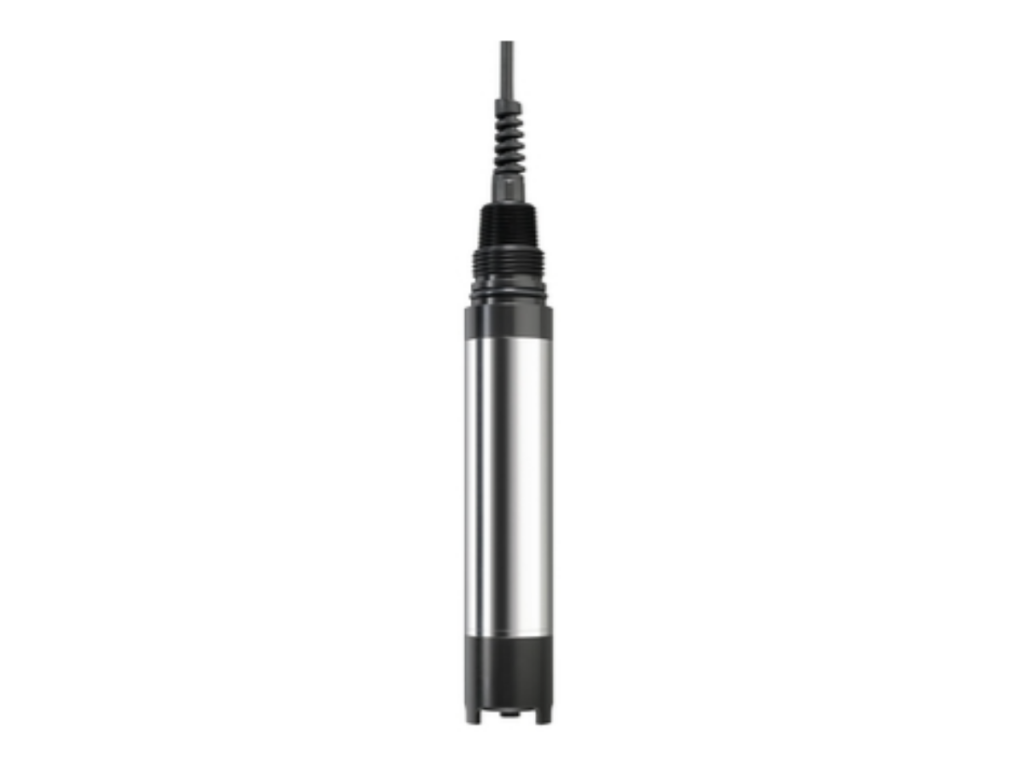
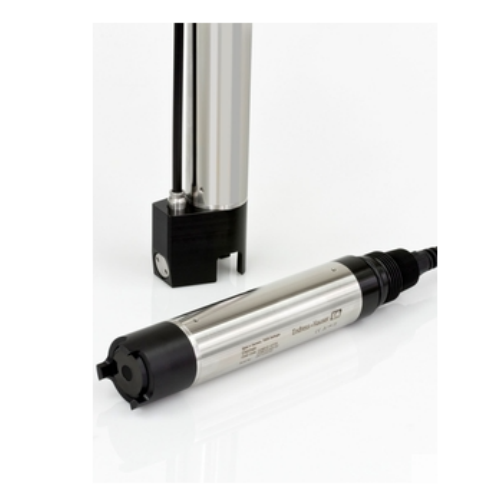
The COS61D Optical Dissolved Oxygen Probe is engineered for continuous, accurate DO measurement in harsh industrial environments, municipal wastewater plants, and water quality monitoring networks. Unlike traditional amperometric DO sensors that consume oxygen during measurement and require frequent electrolyte replacement, the COS61D operates on the luminescence quenching principle. This physical optical method eliminates oxygen consumption, allowing stable measurement in stagnant media without requiring continuous fluid flow. Equipped with Memosens digital technology, calibration data and sensor history are stored directly within the sensor head. This enables pre-calibration in the laboratory and quick field replacement, significantly reducing downtime and operational costs for water treatment facilities. The maintenance-free and chemical-free design eliminates traditional membranes and electrolytes, requiring only simple replacement of the optical cap when needed. It delivers high operational availability, remaining unaffected by hydrogen sulfide (H2S) or other common chemical interferences that poison traditional sensors. With its fast response and high accuracy, it is ideal for dynamic aeration control in activated sludge basins (SBR, Anamox processes) to optimize energy consumption. Its robust stainless steel construction, featuring a heavy-duty SS316L body and POM sensing cap, ensures durability in harsh wastewater and industrial effluents, while internal smart diagnostics alert operators to potential optical fouling or cap wear to guarantee measurement integrity.
Frequently Asked Questions
Q1: What is the main advantage of an optical DO sensor over traditional galvanic/polarographic sensors?
A:Optical DO sensors use fluorescence quenching, which does not consume oxygen or require liquid movement (zero flow dependency). They do not use membranes or chemical electrolytes, eliminating weekly maintenance, membrane replacement, and electrolyte refilling.
Q2: Does the COS61D sensor require frequent calibration?
A:No. Due to the high long-term stability of the optical fluorescence layer, drift is virtually zero. Factory calibration data is stored inside the sensor. Routine calibration is typically only needed annually or when replacing the optical sensing cap.
Q3: Can this optical DO sensor measure oxygen in stagnant or still water?
A: Yes. Since the measurement principle does not consume oxygen from the medium, accurate readings can be obtained even in zero-flow conditions, such as deep lakes, stagnant tanks, or lab samples.
Q4: How often should the optical cap (optode cap) be replaced?
A: Depending on process conditions (abrasion, chemical exposure, light intensity), the optical cap typically lasts between 1.5 to 3 years. Replacement takes less than a minute and can be done easily in the field.
Q5: Is this sensor compatible with existing transmitter platforms?
A:Yes, the sensor supports Memosens digital communication and standard digital protocols (RS485/Modbus RTU options), making it seamlessly compatible with standard water quality transmitters and controllers (e.g., Liquiline series).
Technical Specifications
| Measurement Principle | Optical oxygen measurement |
|---|---|
| Applications | Aeration basins, river monitoring, water treatment, fish farming. |
| Features | Digital optical (luminescence-based) dissolved oxygen measurement. No flow required; measurements can be performed in still water. |
| Measuring Range | 0–20 mg/L 0%–200% SAT 0–400 hPa |
| Measuring Principle | Oxygen-sensitive molecules (luminophores) are integrated into an optically active layer (luminescent layer). The surface of the luminescent layer is in contact with the medium. The sensor optics are located directly beneath the luminescent layer and emit green light pulses toward it. The luminophores respond by emitting a deep-red fluorescence. The duration and intensity of the response signal are directly proportional to the oxygen concentration and oxygen partial pressure. |
| Design | Calibration parameters stored inside the sensor. High EMC protection. |
| Materials | Sensor body: Stainless steel 1.4571 (316Ti) Membrane cap: POM |
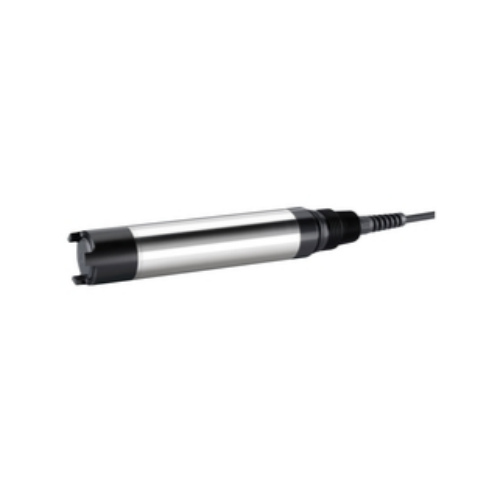
| Dimensions | Diameter: 40 mm (1.56 in) Length: 220 mm (8.58 in) |
| Process Temperature | -5 to 55°C (23 to 131°F) |
| Process Pressure | Max. 10 bar (145 psi) |
| Temperature Sensor | NTC temperature sensor, 0 to 50°C (32 to 122°F) |
| Connection | Process connection: G1" thread Cable connection: Fixed integral cable or TOP68 plug-in connector |
Product documents
Unlock technical documents.
Enter your work email and WhatsApp number once to access all documents for this product.