
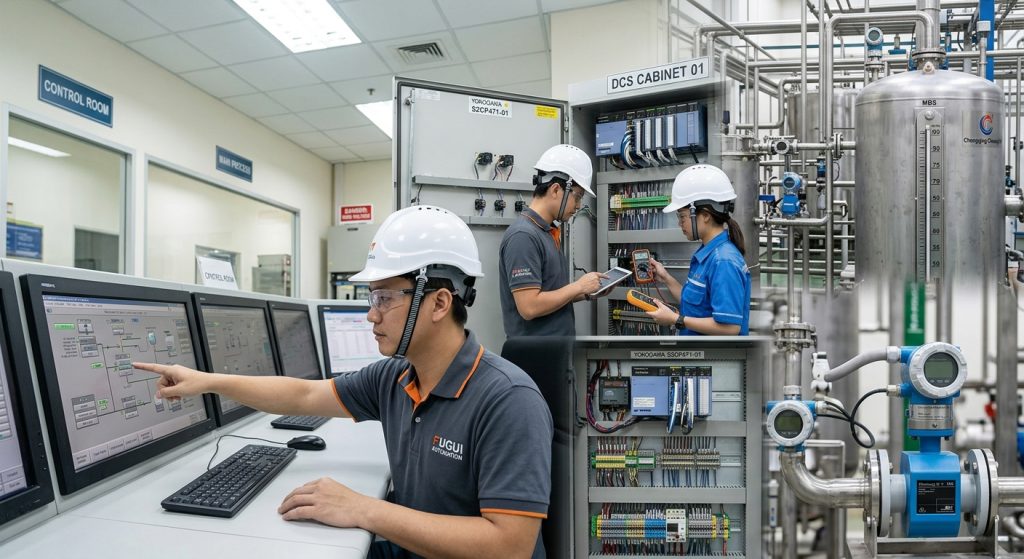
Executive Summary: The High-Stakes Reality of Global Industrial Procurement
For procurement directors, instrumentation engineers, and EPC project managers in continuous process industries—such as petrochemical refining, chemical manufacturing, power generation, and municipal water treatment—sourcing process control hardware is rarely a routine purchase. A single failing pressure transmitter, an unstable electromagnetic flowmeter, or a damaged Distributed Control System (DCS) I/O module can trigger an immediate plant shutdown.
In modern continuous manufacturing, unplanned facility downtime costs between $20,000 and $100,000 per hour. Yet, international buyers routinely face four major operational bottlenecks when sourcing hardware through conventional channels:
- Protracted OEM Lead Times: Standard factory build schedules for specialized instrumentation from top-tier brands (such as Endress+Hauser or Yokogawa) frequently range from 16 to 36 weeks.
- Technical Misalignment: Incorrect model code selection leading to incompatible signal outputs, improper wetted materials, or mismatched process connections.
- Grey-Market & Authenticity Risks: The proliferation of refurbished, counterfeit, or improperly stored electronic components labeled as “new.”
- Export Logistics Friction: Improper customs documentation, lack of hazardous area certifications (ATEX/IECEx), or inadequate export packaging resulting in transit damage.
This comprehensive guide breaks down the technical parameters, verification protocols, and strategic sourcing models required to streamline international procurement of industrial process instrumentation and DCS hardware—ensuring operational continuity while minimizing Total Cost of Ownership (TCO).
Section 1: Core Instrument Categories & Technical Selection Criteria
Selecting field instrumentation requires balancing process medium characteristics with system communication requirements. Below is a detailed technical analysis of key measurement categories and critical parameters for global buyers.
1.1 Distributed Control System (DCS) Cards & Controller Modules
The Distributed Control System serves as the central nervous system of any modern process plant. When replacing or expanding DCS hardware, exact hardware revision matching and firmware compatibility are mandatory.
- Yokogawa S2CP471-01 Controller Module: Serves as a core control unit within Yokogawa DCS architectures. It requires real-time processing capabilities and high-speed VNET/IP communication connectivity. Procurement teams must verify backplane bus compatibility and redundant controller configuration settings before deployment.
- Yokogawa AAI143-H50 Isolated Analog Input Module: A 16-channel isolated module handling standard 4–20 mA signals. Key technical specs to audit include channel-to-channel isolation voltage, noise suppression performance, and matching terminal block adapter part numbers.
- Yokogawa ADV151-P50 / D5A00 Digital Input Module: A 32-channel, 24 V DC isolated digital input card engineered for high-density discrete signal monitoring.
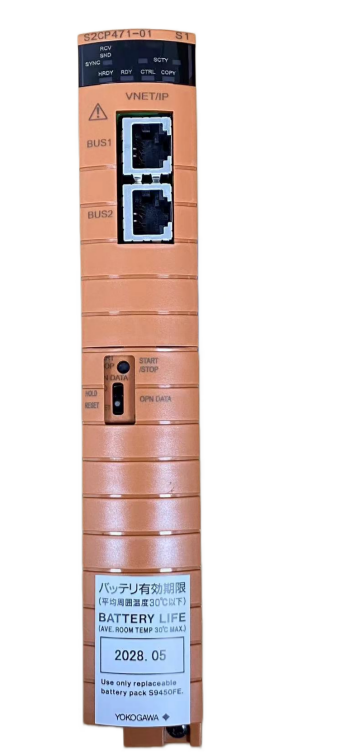
View Complete Catalog of Yokogawa DCS Spare Parts & Controller Modules
1.2 High-Precision Flow Measurement Solutions
Flow measurement technology selection depends heavily on fluid conductivity, pipe diameter, ambient operating temperatures, and acceptable pressure drop limits.
Electromagnetic Flowmeters: Operating on Faraday’s Law of Electromagnetic Induction, meters like the Endress+Hauser Promag W 10 provide volumetric flow readings unaffected by fluid density, viscosity, or temperature. For underground or submerged installations, specifying an IP68-rated fully welded housing with protective corrosion coatings is vital.
Thermal Mass Flowmeters: Devices such as the E+H t-mass B 150 offer direct mass flow measurement for compressed air and industrial gases without requiring separate temperature and pressure compensation transmitters. Their high turndown ratio enables accurate detection of low-rate pipeline leaks.
Explore Industrial Flow Measurement Transmitters & Sensors
1.3 Smart Pressure & Differential Pressure Transmitters
Pressure monitoring spans from vacuum service in distillation columns to high-pressure hydrogen process lines.
- Dry Ceramic Sensor Technology: Transmitters equipped with dry ceramic sensors—such as the Endress+Hauser PMC51 High-Precision Pressure Transmitter utilizing Ceraphire® ceramic technology—offer distinct advantages over traditional oil-filled metallic diaphragms. They deliver up to 60 bar overload resistance, exceptional vacuum stability, and high resistance to abrasive process media.
- Hydrogen Service & Severe Duty: Sourcing transmitters for hydrogen process lines requires careful material selection (such as gold-plated diaphragms or specialized alloy seals) to prevent hydrogen embrittlement and permeation through metallic membranes.
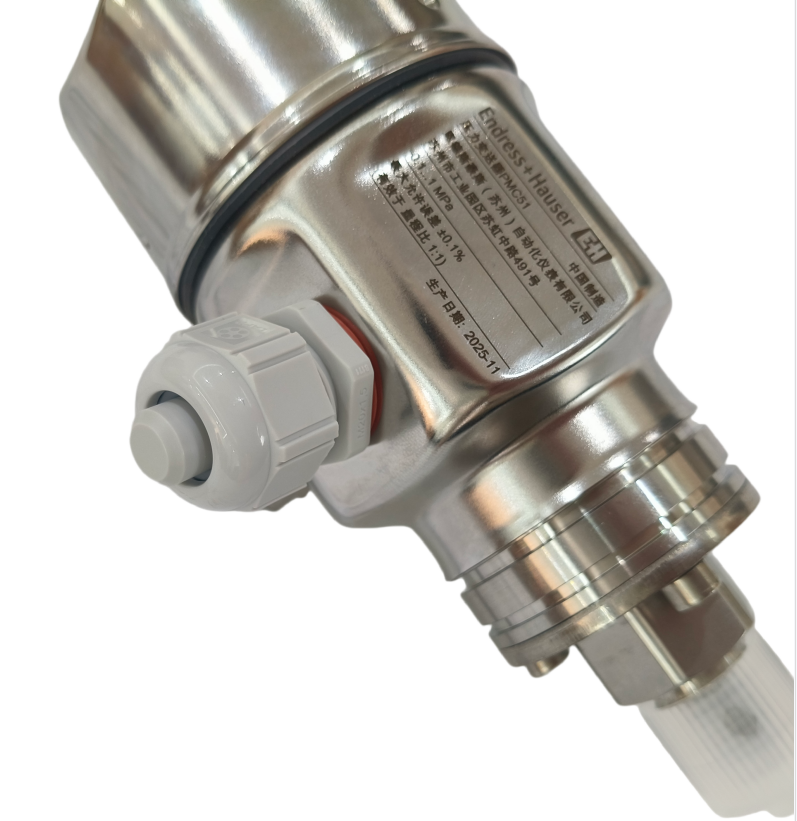
Browse Smart Pressure and Differential Pressure Transmitters
1.4 Continuous & Point Level Measurement Systems
Level monitoring requires matching the measuring principle to tank geometry, vessel pressure, and media characteristics.
- Non-Contact Ultrasonic Transmitters: The E+H FMU40 utilizes non-contact acoustic travel-time measurement for liquids and coarse bulk solids up to 5 meters. Smart echo-suppression algorithms filter out false reflections caused by internal tank agitators or heating coils.
- Submersible Hydrostatic Transmitters: For deep wells, reservoirs, and narrow boreholes, compact hydrostatic level probes like the E+H Waterpilot FMX11 ( featuring a 22 mm outer diameter 316L stainless steel housing) provide continuous level measurement via liquid head pressure. A specialized atmospheric pressure compensation tube enclosed within the cable assembly is essential for long-term accuracy.
- Heavy-Duty Magnetic Level Gauges: For high-pressure, high-temperature, or toxic liquid storage, physical visual level indicators such as the Chongqing Chuanyi MBS Series Side-Mounted Magnetic Level Gauge isolate process media within a sealed chamber while projecting level indications via magnetic coupling. Operating ranges cover extreme temperatures (-190°C to +425°C) and pressures up to 42 MPa.
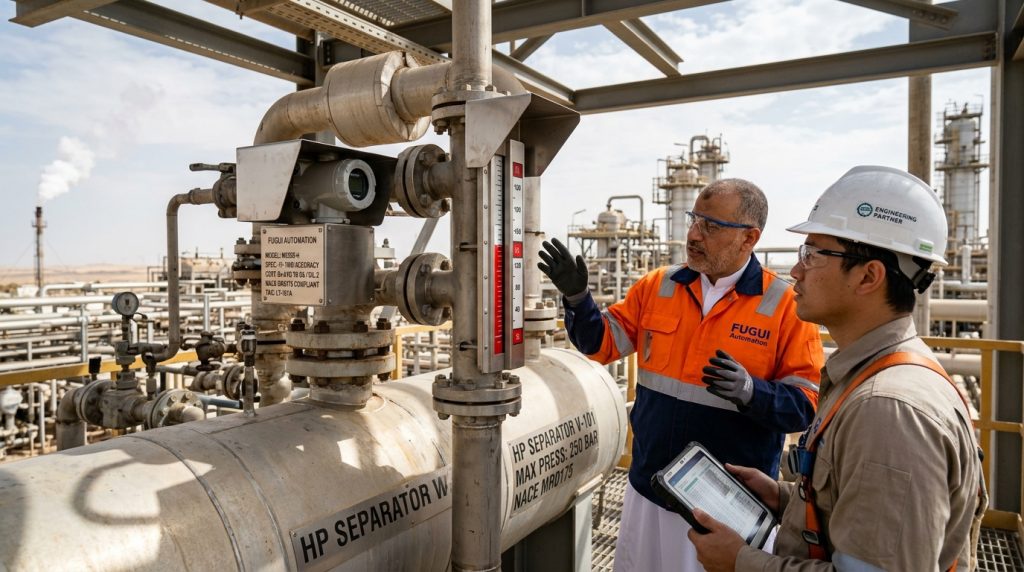
Check Continuous Level Measurement Equipment & Radar/Ultrasonic Sensors
1.5 Liquid Analysis & Online Water Quality Monitoring
Process analytics demand robust sensors capable of operating continuously in aggressive chemical environments or continuous municipal water lines without frequent recalibration.
- Multi-Parameter Digital Transmitters: Transmitters like the E+H Liquiline CM442 and Liquisys CPM223 act as central control units for liquid monitoring. Supporting Memosens digital technology, these units convert analog sensor signals to digital data inside the sensor head before transmission. This eliminates measurement drift caused by moisture or cable length resistance.
- Optical Turbidity & Suspended Solids (TSS) Sensors: Sensors like the E+H Turbimax CUS51D utilize 90° scattered light and 4-beam alternating light systems to deliver drift-free monitoring of turbidity and suspended solids in wastewater treatment. Features like integrated compressed-air cleaning nozzles prevent optical bio-fouling.
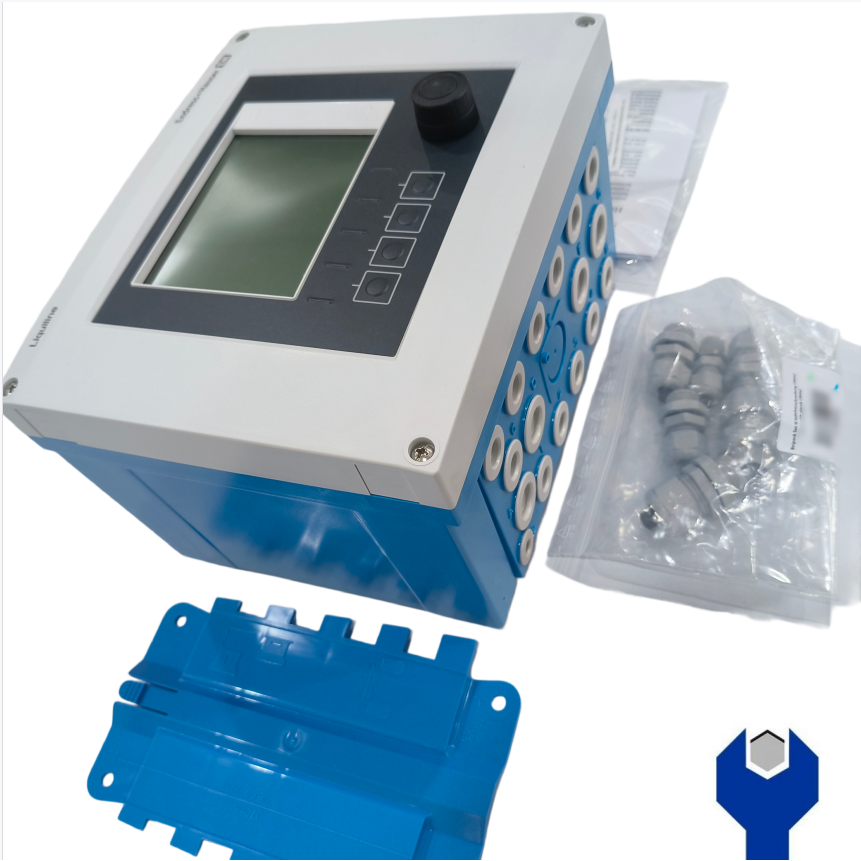
Discover Online Water Quality Analyzers & Liquid Analytical Transmitters
Section 2: Mitigating International Sourcing Risks
International procurement of industrial automation hardware requires rigorous supplier evaluation and supply chain management. Below is an operational matrix designed to eliminate procurement risk.
Risk 1: Counterfeit Hardware and Grey-Market Refurbishments
To safeguard against uncertified or second-hand items:
- Require Factory Certification: Demand original manufacturer test certificates (EN 10204 3.1) and certificate of origin documentation.
- Database Verification: Cross-check product serial numbers directly through official OEM online portals or customer service nodes prior to installation.
- Pre-Shipment Inspection (PSI): Request high-resolution inspection photography showing laser-etched serial numbers, factory terminal seals, and undamaged hardware conformal coatings.
Risk 2: Project Delays Caused by Standard Factory Lead Times
When OEM factory queues stretch into months, independent stockists with established global supply networks become essential operational partners. Partnering with suppliers who maintain ex-stock inventory for high-demand items—such as Yokogawa DCS cards or E+H transmitters—enables plant operations to reduce dispatch windows from 20+ weeks down to 24–48 hours.
Risk 3: Cross-Border Transit Damage & Customs Delays
Sensory instrumentation and DCS circuit boards are vulnerable to shock, electrostatic discharge (ESD), and moisture damage.
- DCS Circuit Boards: Must be packaged in sealed ESD anti-static shielding bags with desiccant packs before insertion into shock-absorbing foam boxes.
- Heavy Flowmeters & Level Gauges: Require heavy-duty, heat-treated wooden crates compliant with international ISPM 15 standards.
- Documentation: Harmonized System (HS) codes, commercial invoices, and ATEX/IECEx hazardous area certificates must be explicitly aligned with recipient country customs requirements.
Section 3: The 5-Step Engineering & Procurement Selection Workflow
To ensure seamless integration and eliminate ordering errors, cross-functional teams (procurement officers and instrument engineers) should follow this standard 5-step evaluation protocol:
Step 1: Process Medium & Operating Envelope Analysis
- Identify exact chemical composition, fluid state (liquid, gas, steam, multi-phase), normal/maximum process temperatures, line pressures, and flow velocities.
- Determine abrasive or corrosive properties to select correct wetted parts (e.g., 316L, Hastelloy C-276, Titanium, Tantalum, PTFE, PVDF).
Step 2: Signal Output & Control Architecture Matching
- Confirm communication protocols required by the host DCS or PLC system:
- Analog: 4–20 mA HART (v5, v7)
- Digital Bus: PROFIBUS PA, FOUNDATION Fieldbus, RS485 Modbus RTU
- Proprietary Control Bus: Yokogawa VNET/IP
Step 3: Mechanical Fitting & Spatial Constraints Verification
- Check pipe line sizes, flange connection standards (ANSI/ASME B16.5, DIN, JIS), pressure ratings (Class 150/300/600, PN16/40/100), thread types (NPT, G thread), and sensor immersion lengths.
- Verify physical enclosure dimensions to ensure fit within tight skid configurations.
Step 4: Environmental Protection & Hazardous Area Compliance
- Match hazardous zone classifications: ATEX / IECEx Zone 0, 1, 2 (Gas) or Zone 20, 21, 22 (Dust); Class I, Div 1 / Div 2.
- Ensure enclosure ingress ratings meet site requirements (IP65 for indoor plants; IP67/IP68 for washdown, outdoor, or underground installation).
Step 5: Total Cost of Ownership (TCO) & Downtime Exposure Evaluation
- Evaluate the purchase price alongside operational risks:$$\text{Total Cost of Ownership (TCO)} = \text{Hardware Cost} + \text{Shipping/Duty} + (\text{Lead Time Days} \times \text{Daily Downtime Risk Cost}) + \text{Expected Lifetime Maintenance}$$
- Sourcing an ex-stock instrument at a minor logistical premium is significantly more cost-effective than halting production lines for several months waiting for OEM factory production.
Section 4: Why Global Buyers Partner with FUGUI Automation
As a international distributor and stockist specializing in industrial process control instrumentation and DCS hardware, FUGUI Automation serves as a vital bridge between rigorous industrial requirements and global supply chains.
- Extensive Ex-Stock Inventory: We maintain stock of critical Yokogawa DCS controller modules (S2CP471-01, AAI143, ADV151), Endress+Hauser measurement devices (Promag, PMC51, FMU40, Liquiline), and Chongqing Chuanyi magnetic level gauges.
- Engineering Pre-Sales Verification: Our technical team reviews user model codes, mechanical specs, and process requirements before order placement to guarantee 100% field compatibility.
- Rigorous Quality Control: Every unit undergoes visual, electrical, and serial verification prior to export. Complete factory documentation and custom packing are provided standard.
- Rapid Global Logistics Execution: Through long-standing partnerships with express couriers (DHL, FedEx, UPS) and international air freight forwarders, we deliver urgent replacement parts to project sites worldwide within days.
Learn More About FUGUI Automation’s Global Supply & Support Network
Section 5: Frequently Asked Questions (FAQ) for International Buyers
Q1: How does FUGUI Automation verify the authenticity of Yokogawa DCS cards and E+H instruments?
Answer: All items supplied by FUGUI Automation undergo strict quality control protocols. We verify original factory serial numbers, inspect laser-etched nameplates, examine original factory seals, and provide manufacturer test certificates (EN 10204 3.1) upon request. We encourage clients to cross-check serial numbers directly with OEM databases.
Q2: What delivery timeframes can we expect for urgent spare part orders?
Answer: For ex-stock inventory, orders are processed and dispatched within 24 to 48 hours following payment confirmation. Utilizing premium express air couriers (DHL, FedEx, UPS), transit times to major industrial hubs in North America, Europe, the Middle East, and Southeast Asia typically range between 3 to 7 business days.
Q3: What if we only have a partial part number or an obsolete legacy model code?
Answer: Our application engineers can cross-reference legacy part numbers against current OEM production standards. By analyzing your existing process conditions (medium, pressure, temperature, signal output), we can recommend direct functional equivalents or updated replacement series without requiring redesigns of your existing piping or electrical infrastructure.
Q4: Are hazardous area certificates (ATEX, IECEx) provided with exported instruments?
Answer: Yes. When ordering instruments designed for explosion-proof or intrinsically safe environments (Ex d, Ex ia), we supply the corresponding ATEX, IECEx, or national certification documentation matching the specific order suffix code.
Request a Quote (RFQ) & Technical Support
Facing an urgent plant maintenance shutdown, upgrading a process control line, or looking to secure hard-to-find DCS spare parts?
Contact FUGUI Automation’s technical procurement team today for immediate inventory checks, formal quotations, and technical selection support:
- Official Email: sales@fuguiautomation.com
- Direct Line / WhatsApp: +86 18827058766
- Website: https://www.fuguiautomation.com
- Online RFQ Portal: Request an Express Quote Online