
Produkt
E+H Condumax CLS19 Conductive Conductivity Sensor Probe
CLS19-A1A1A
Engineered specifically for conductivity measurement in low-conductivity range (pure and ultrapure water applications, 0 to 20 µS/cm or 0 to 200 µS/cm). Made with high-grade PES cell shaft and 1.4571 (316Ti) stainless steel coaxially arranged electrodes for exceptional long-term stability.Built-in Pt100 temperature sensor for automatic, highly accurate thermal compensation.Standard NPT 1/2" process connection with Pg9 DIN 4-pole connector for rapid drop-in replacement and seamless OEM integration.
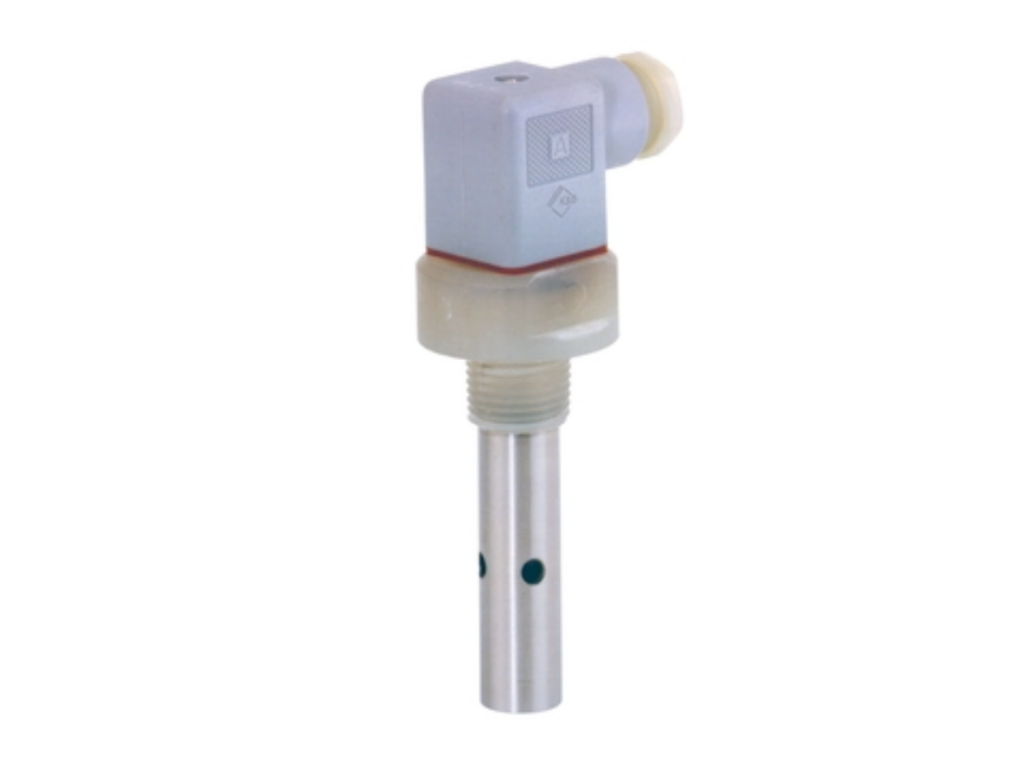
The CLS19 Industrial Conductive Conductivity Sensor is a high-performance, two-electrode analytical probe designed for continuous conductivity and resistivity monitoring in pure and ultrapure water systems. Engineered with coaxially arranged electrodes, it delivers fast response times and uncompromised precision in low-conductivity media where standard sensors struggle.Whether you are monitoring industrial reverse osmosis (RO) systems, demineralizer ion exchangers, boiler feedwater, or pharmaceutical distillation loops, the CLS19 provides reliable, drift-free measurement data with minimal maintenance requirements. Its compact, rugged design makes it the ideal cost-effective choice for system integrators, OEM equipment manufacturers, and water treatment facility operators worldwide. Ensures a defined electric field and highly stable cell constant.Constructed with rugged PES (Polyethersulfone) bodies and corrosion-resistant 1.4571 stainless steel, capable of withstanding operating pressures up to 6 bar at 20 °C. Threaded process interface allows quick mounting into pipes or flow-through chambers, reducing installation and calibration downtime.Fully compatible with standard industrial conductivity transmitters, controllers, and PLC systems.
FAQ
Q1: What is the main difference between cell constant k=0.01 and k=0.1?
A: The cell constant determines the optimal measuring range. k=0.01 is tailored for ultra-pure water applications (up to 20, while k=0.1 is suitable for general pure water, cooling water, and RO permeate systems (up to 200).
Q2: Is this sensor compatible with non-OEM conductivity transmitters?
A: Yes. The CLS19 sensor uses standard analog signals (2-electrode conductive setup with an integrated Pt100 temperature element). It easily integrates with standard industrial transmitters, PLCs, or liquid analysis controllers.
Q3: How often does the CLS19 sensor require calibration?
A: Due to its robust stainless steel/PES coaxial construction, cell constant drift is extremely low. Routine calibration check with precision conductivity standard solutions is recommended once every 6 to 12 months depending on process conditions.
Technische Daten
| Measurement Principle | Conductivity |
|---|---|
| Applications | Pure water and ultrapure water |
| Features | Two-electrode sensor for pure water measurement |
| Measurement Range | k=0.01: 0...20 µS/cm k=0.1: 0...200 µS/cm |
| Measurement Principle | Conductive conductivity sensor |
| Design | Two-electrode conductivity sensor; coaxial electrode arrangement; electropolished finish |
| Materials | Sensor body: PES Electrodes: Stainless steel 1.4571 |
| Dimensions | Electrode diameter: 16 mm (0.62 inch) |
| Process Temperature | Max. 60°C Max. 140°F |
| Process Pressure | Max. 6 bar at 20°C (87 psi at 68°F) |
| Temperature Sensor | Optional Pt100 |
| Connections | Process connection: NPT 1/2" Cable: 4-pin DIN connector (Pg9) |
| Protection Rating | IP65 |
| Other Certificates | Quality certificate |
Produktdokumente
Technische Dokumente freischalten.
Geben Sie einmal Ihre geschäftliche E-Mail und WhatsApp-Nummer ein, um alle Dokumente abzurufen.